Myles de Bastion
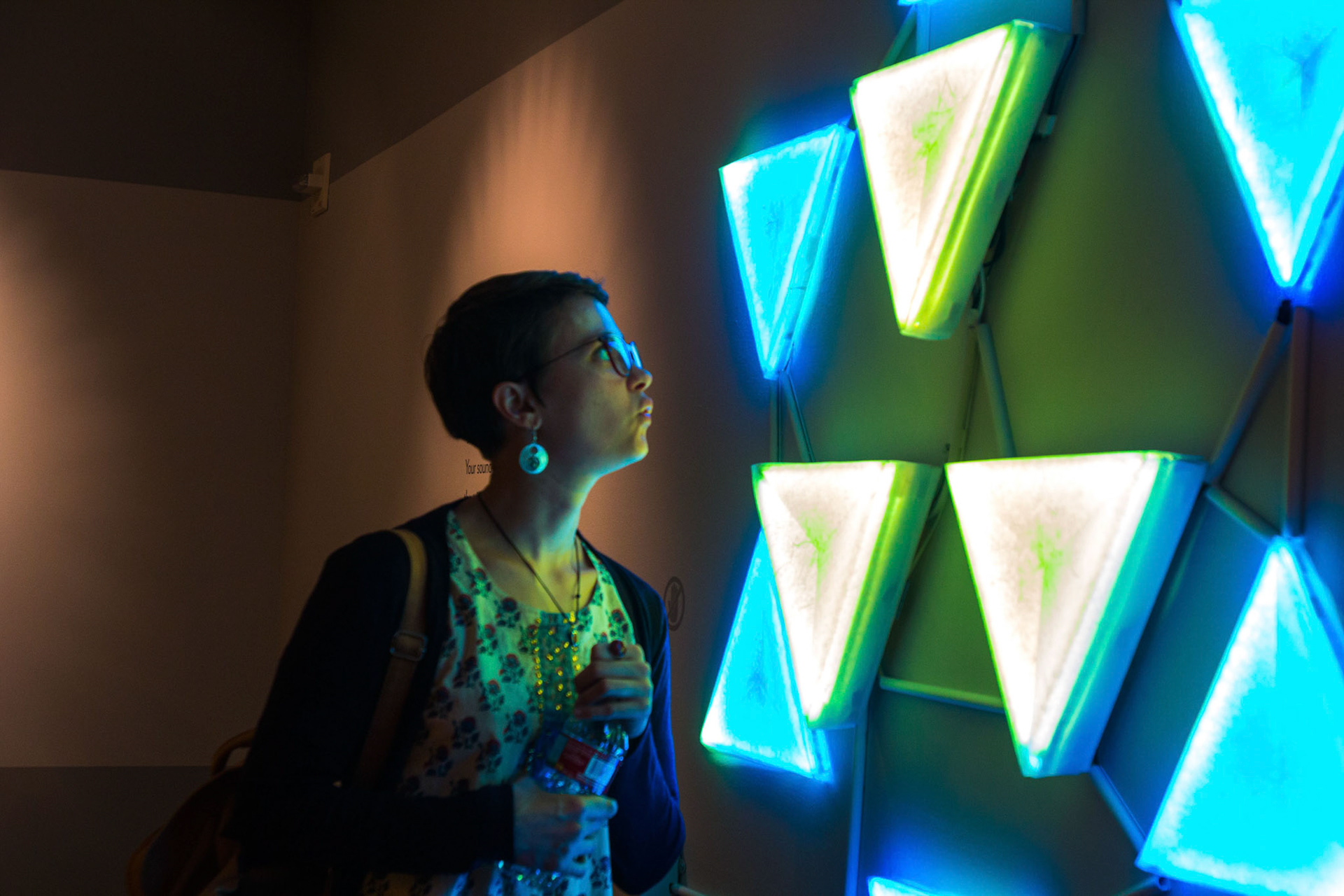
A visitor with cropped dark hair and glasses stands in profile looking up at the star, her face and floral top washed cyan and green by the glowing paper triangles beside her

05, Interactive installation

Cymatic Star

Artists
Myles de Bastion & Nick Tzaperas
Year
2015
Materials
Acrylic, Shuji paper, micro-electronics
Dimensions
5′ × 4.5′

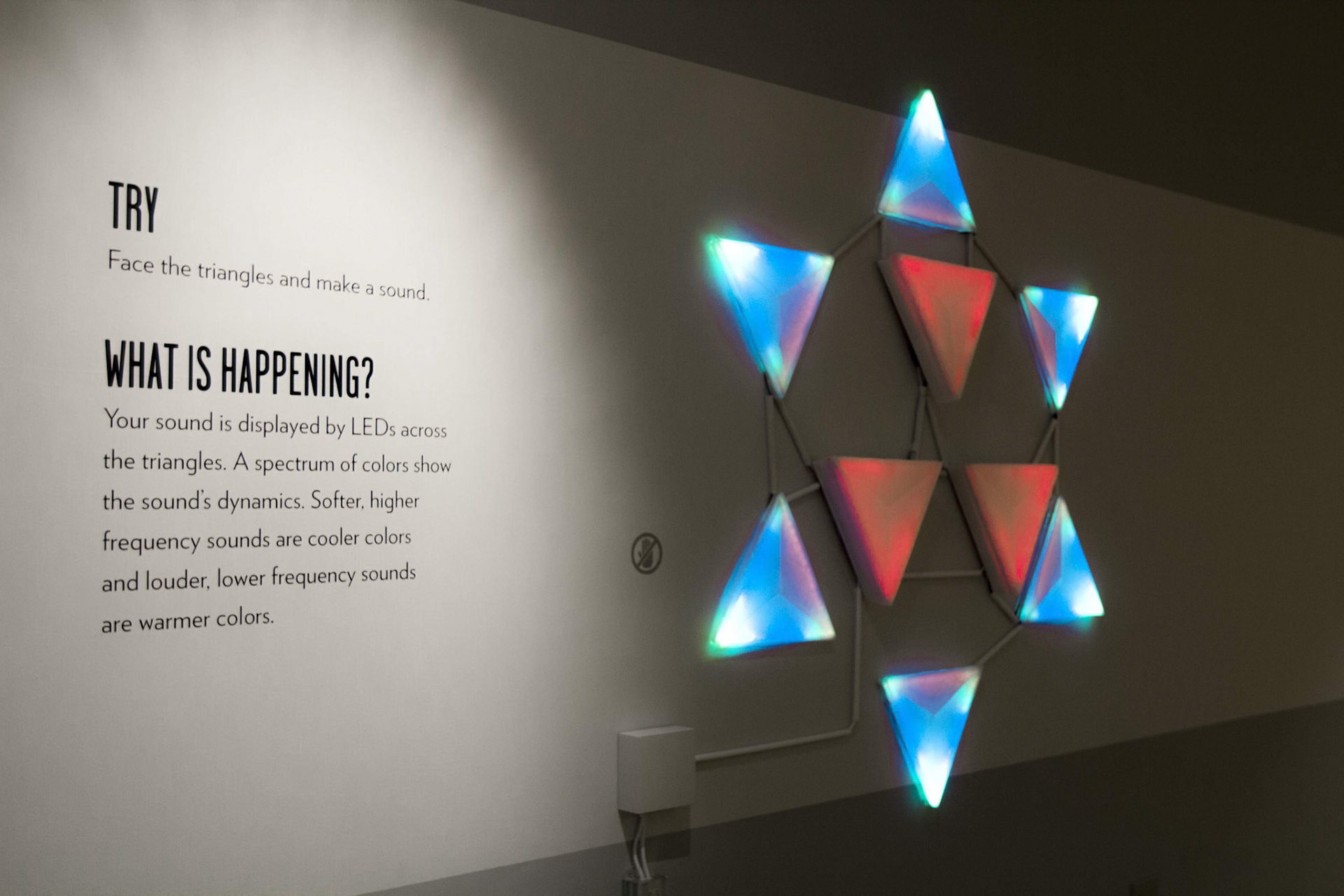
WHAT IS HAPPENING?

Your sound is displayed by LEDs across the triangles. A spectrum of color shows its dynamics.

Softer, higher frequency sounds read as cooler colors. Louder, lower frequency sounds read as warmer colors.

Micro-electronics analyze the loudness and softness of the sound in the room. A visual representation of those waves ripples outward across the triangles at 1/100th the speed of sound.

Cymatic Star (2015)

I built it with Nick Tzaperas: nine triangles of Shuji paper and acrylic arranged as a star, each one outlined in LEDs. The wall text was the only instruction. Face the triangles and make a sound.

It debuted at the Portland Art Museum, September 2016 to February 2017, in “Sound Beyond the Auditory,” part of the museum's Object Stories series. More than 115,000 people saw it there.
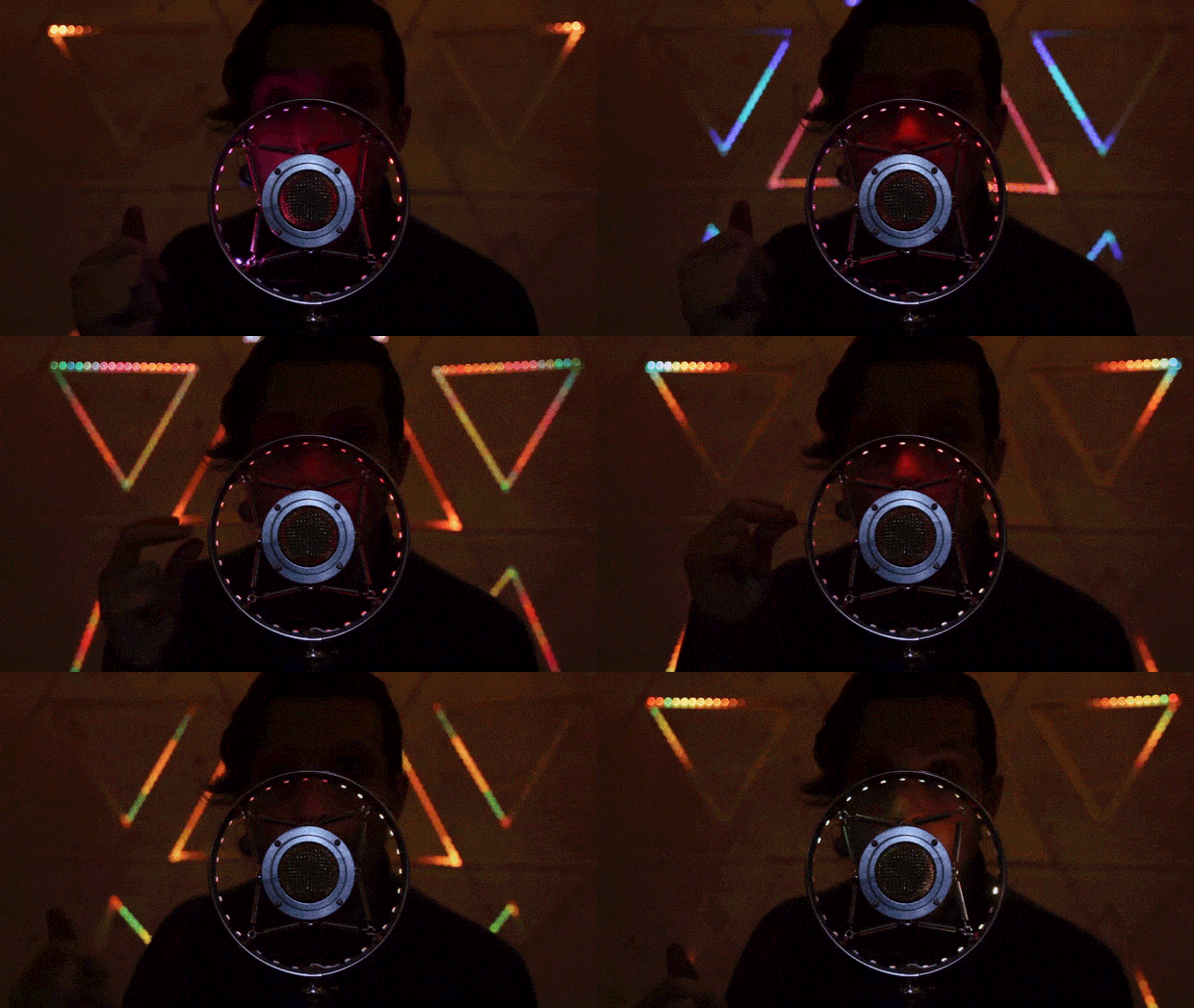
Animated loop: Myles de Bastion makes sound into the ring-shaped microphone in front of his face and the LED-outlined triangles on the wall behind him light up in sequence through red, orange, green and blue
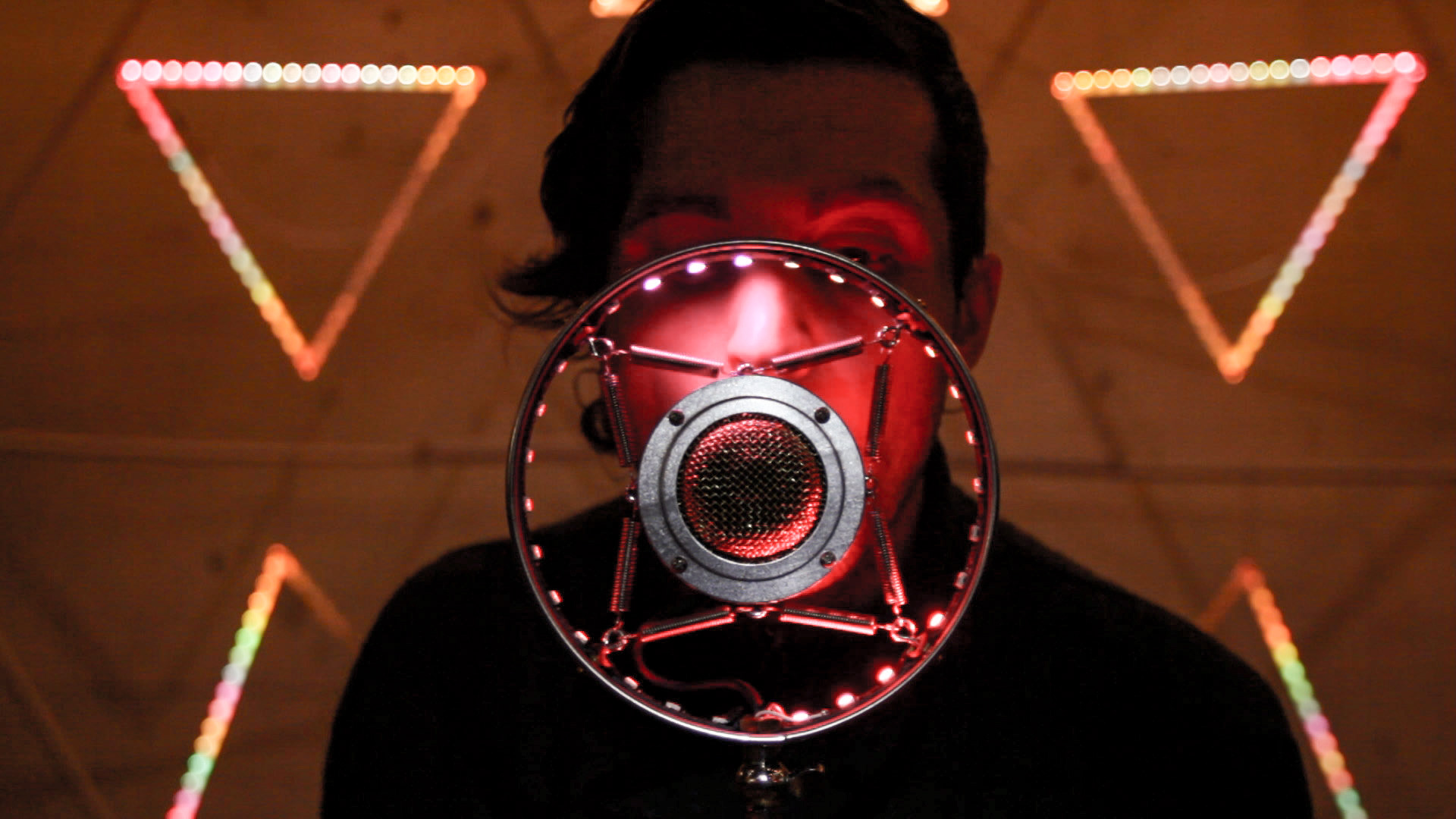
Myles de Bastion faces the camera in deep red light, a ring-shaped microphone rimmed with small LEDs held directly in front of his face, two LED-outlined triangles glowing warm orange on the wall behind him
The nine-triangle star lit on a pale museum wall, the six outer triangles glowing blue and cyan and the three inner ones red, beside wall text reading “TRY: Face the triangles and make a sound”
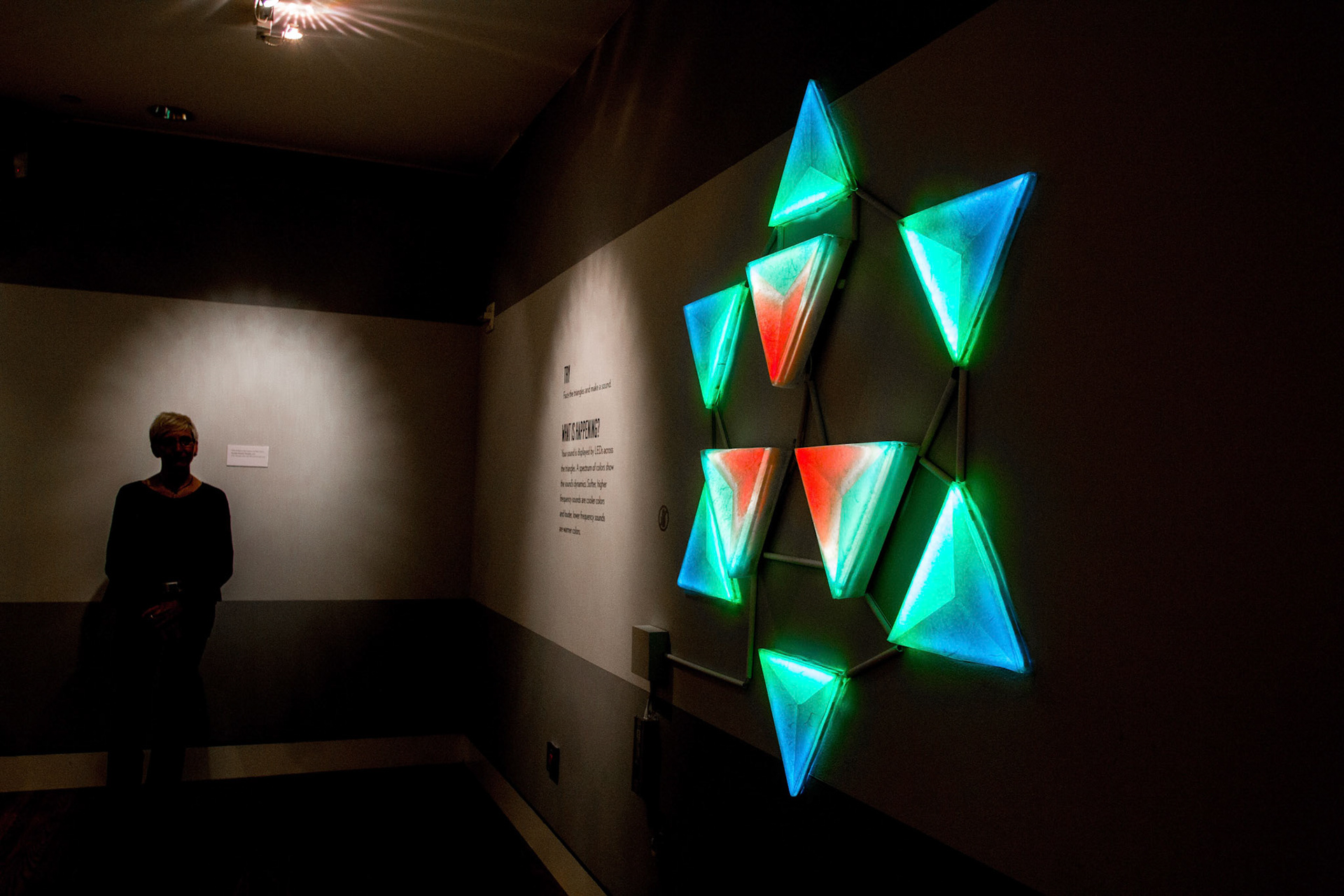
The star glowing green and cyan with two red inner triangles in a darkened gallery, a visitor standing in silhouette against the dim far wall to the left
Next project Audiolux One